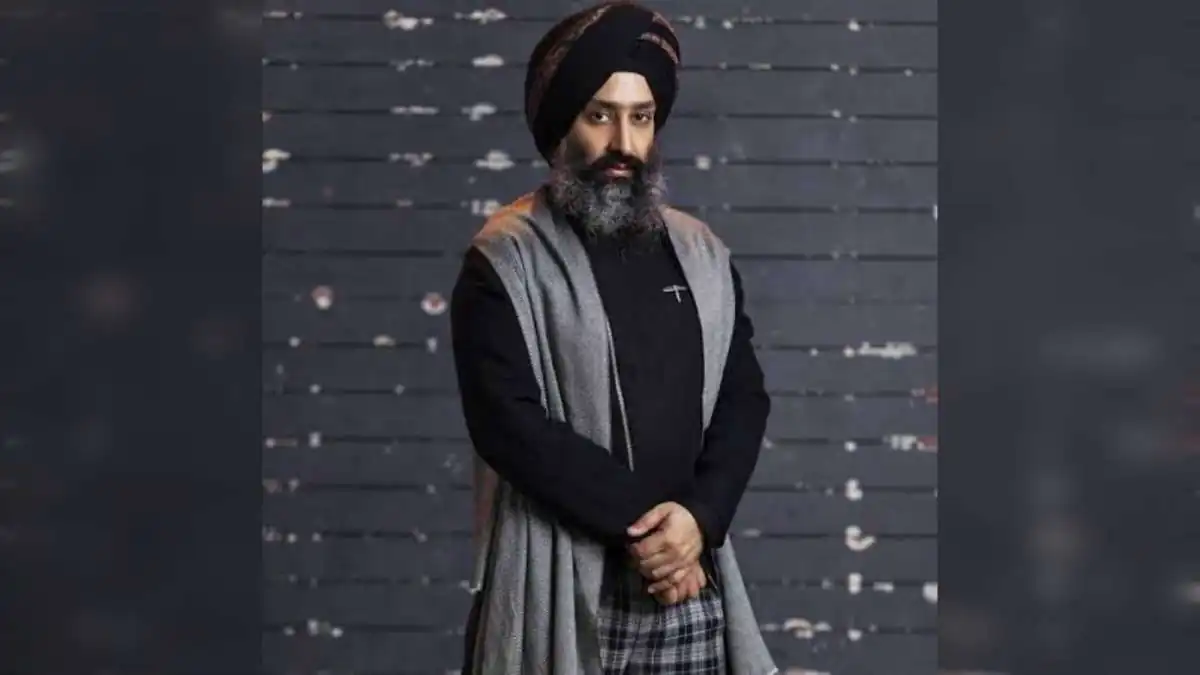









































Rabbi Shergill believes the music industry lost something important when traditional labels stopped being the main gatekeepers.
"The parameters of the industry have changed a lot. The specifics have changed a lot. Earlier, there used to be a music label," he told IANS. "The music label had its own A&R. The chairman, directors and gatekeepers of the music label used to be there. And an artist had to please all of them."

Rabbi admits that many artists resented these gatekeepers. "At that time, we used to feel that these people were not associated with the audience... But what we could not see at that time was a basic minimum filtering."

Today, he says, "there is no basic minimum filtering. Our music of the 90s and 2000s gave you songs that you still listen to today."
"Does It Tell the Back Story of Your Life?"
He pointed to Lucky Ali and Hariharan as examples of enduring music. "So, I think in the next 20 years, we will get an answer to this. Is there any longevity in today's music?"
"Does today's music tell the back story of your life? What is going on inside you? Does it give you a direction? Does it give you an expression?" he asked. "I feel that art has disappeared a little."
Why It Matters: Two Sides of the Same Change
In the streaming era, anyone can release a song without a label's approval, and thousands of tracks are uploaded every day. Without a filter, quality varies widely, and songs can rise and fade within weeks.
But the same change has also opened doors. Independent artists can now find large audiences directly. Shows like I-Popstar have built careers around original, non-film music, with its first season's songs crossing 2.06 billion streams. For many young artists, the absence of gatekeepers is exactly what gave them a chance.
Rabbi Shergill's Songs: A Catalogue Built to Last
Rabbi's own career shows the longevity he talks about. Before his debut, he had an unsuccessful stint with Sony Music and Tehelka, and finally released his first album, Rabbi, in 2004 under Phat Phish Records. Relying on word-of-mouth and a music video, "Bullah Ki Jaana" became a chart-topper, and went on to become the most frequently played non-film song of 2005 in India.
Most songs on Rabbi were his own, while others drew on Punjabi literary greats: "Bullah Ki Jaana" from Bulleh Shah, "Heer" from Waris Shah and "Ishtihar" by Shiv Kumar Batalvi.
His second album, Avengi Ja Nahin (2008), addressed communal violence, including the Bilkis Bano case, and the need for "collective morality". His third album, III, came out in March 2012.
| Song | Album / Film | Year |
|---|
| Bullah Ki Jaana | Rabbi | 2004 |
| Tere Bin | Rabbi | 2004 |
| Jugni | Rabbi | 2004 |
| Dilli | Delhii Heights | 2007 |
| Avengi Ja Nahin | Avengi Ja Nahin | 2008 |
| Challa | Jab Tak Hai Jaan (A. R. Rahman, Gulzar) | 2012 |
| Tu Mun Shudi | Raanjhanaa (A. R. Rahman) | 2013 |
Two decades later, "Bullah Ki Jaana," "Tere Bin" and "Challa" remain among his most-played songs.
The Bottom Line
Rabbi Shergill isn't against change; he is asking whether today's music is built to last. His own songs have passed that test. Whether the streaming era produces its own timeless hits, as he says, only the next 20 years can tell.
With inputs from IANS.