




























Karnataka HC Calls for Immediate Action Against Violative Media Broadcasts
Darshan: The Karnataka High Court has heard the petition filed by actor Darshan, accused in the Renuka Swamy murder case. Learn about the entire matter and the court's instructions to the Central Government.

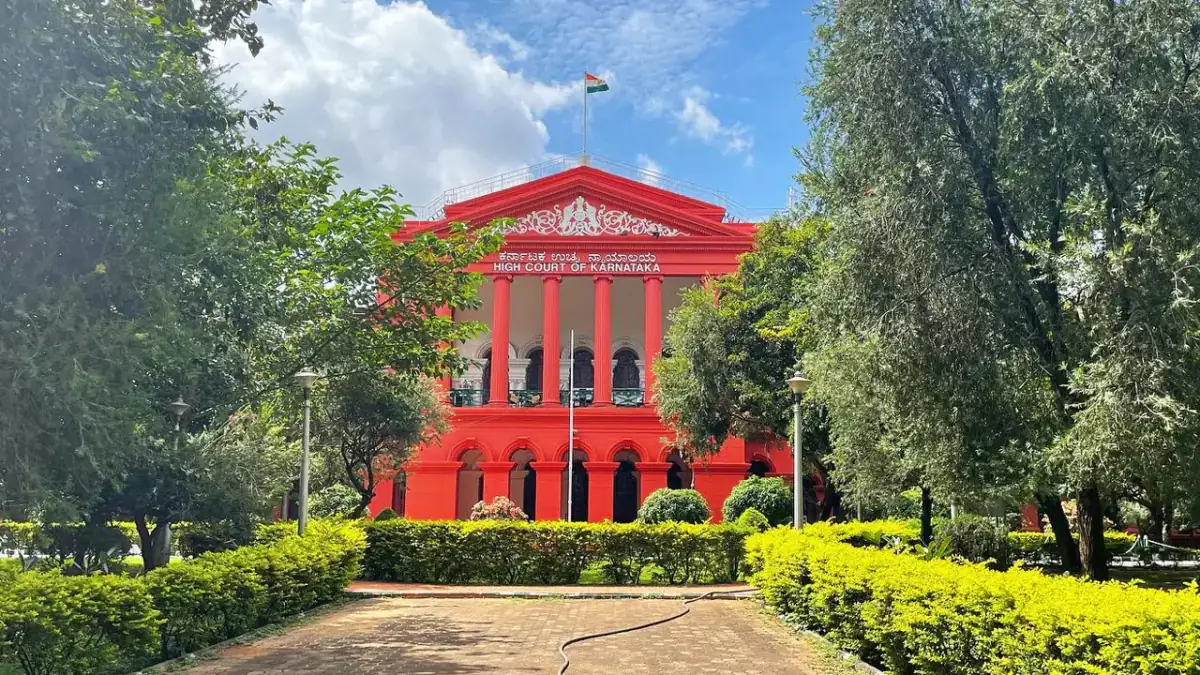
With regard to the Renuka Swamy murder case, the High Court of Karnataka asked the Ministry of Information and Broadcasting and the IT Ministry to examine the broadcasts made by media houses regarding the Kannada film actor Darshan. The Karnataka High Court has promised to take some action if there was anything wrong in the matter. The actor Darshan is currently behind bars.
The High Court issued the order in question on April 30. In the order, the Karnataka High Court criticized the broadcast media for their overreaching efforts in covering the live hearings of the court case. While the face of the judge presiding over the trial is not seen, those of the accused and their counsel can be seen without any problem.
Despite repeated warnings, such broadcasting represents a blatant disregard for judicial authority. The court has now directed the ministry to investigate the controversial broadcasts and digital content links provided by Darshan in his complaint. It also stated that if violations are found, immediate action will be taken against media organizations. This includes a ban on any broadcast or streaming related to the case until further investigation.
Earlier this year, on January 16th, Darshan filed a complaint with the IB Ministry, citing over 1,000 YouTube links and demanding action against the erring channels. When the authorities took no action, Darshan approached the High Court.
In his petition, he stated that the media was grossly violating orders passed by the Karnataka High Court and the city civil court in 2024, which included prohibiting the media from showing or reporting sensitive information related to the case.
Darshan also claimed that media channels were recreating the court proceedings and the alleged scene of the incident by displaying graphics and AI-generated animations, and were discussing evidence recorded by the lower court. Media channels are deliberately and maliciously showing or publishing information related to the proceedings and the case.
Citing decisions from the Supreme Court, the Supreme Court of the United States, and the courts of the UK and France, the bench stated that all these courts have held that media reporting cannot be allowed to substitute judicial decisions or influence the judicial process.
Referring to the footage shown by Darshan, the court observed that this behavior amounts to a planned media-driven judicial decision, which creates a bias before the trial. The court stated that freedom of speech is a constitutional right, but if it turns into media-driven justice, it poses a threat to democracy rather than protecting it.
The media is merely a watchdog, but if it begins to play the role of judge or jury, it can become a threat to the law. We cannot allow this to influence the judicial process.
The court therefore orders the central government to take this matter seriously and take necessary steps. Otherwise the court will intervene in the matter and even cancellation of the license of the concerned media organization can be considered.